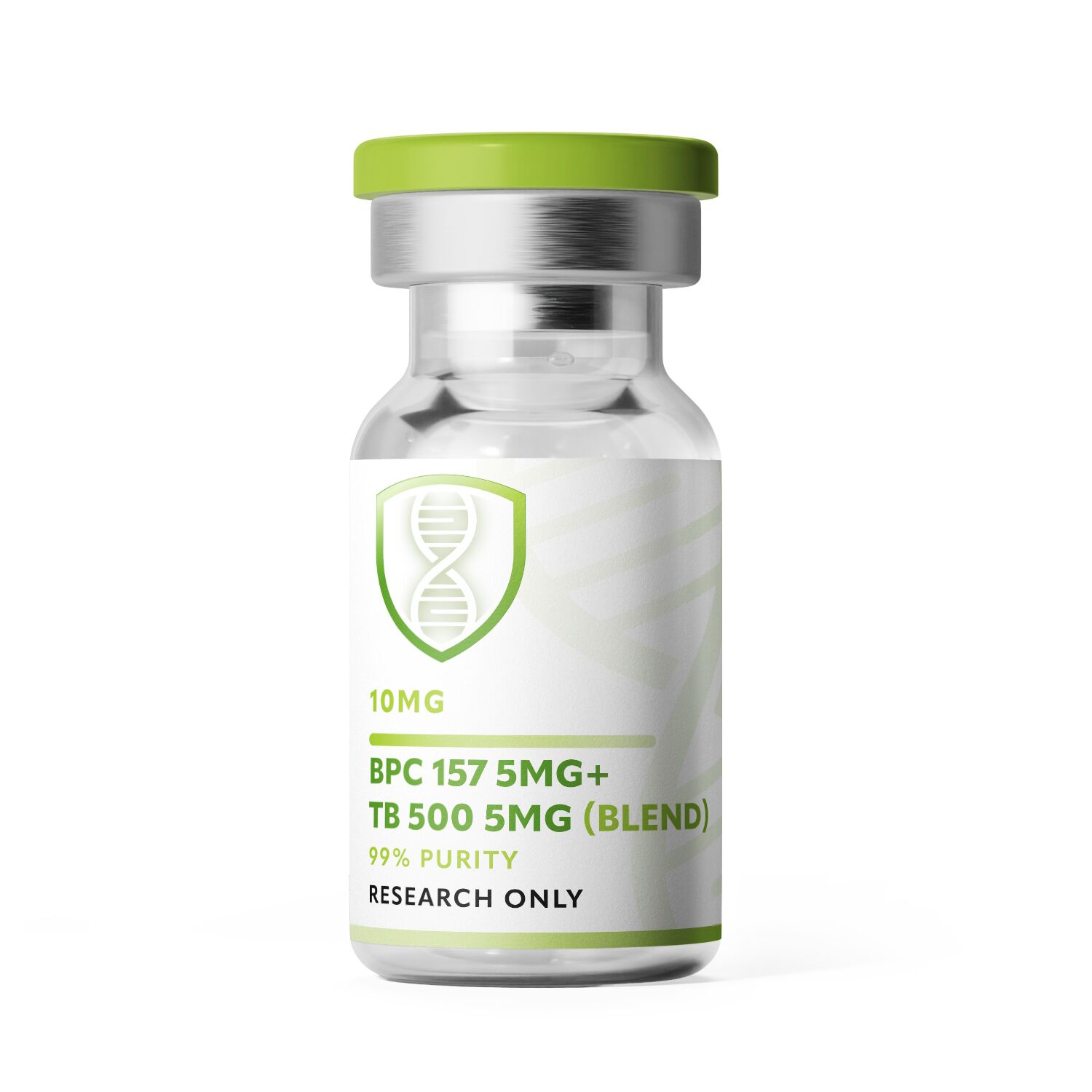
Bpc-157 Blend BPC 157 (5mg) +TB 500 (5mg) Blend
Introduction: Why I’m careful with a “BPC 157 blend” before I ever recommend it
If you’re searching for a bpc 157 blend, you’re probably dealing with a stubborn recovery problem—something that keeps lingering after the initial injury window. In my own hands-on work advising people through structured peptide use, the biggest problem I see isn’t “whether peptides work.” It’s that blends are often treated like a shortcut, without a plan for dose consistency, timing, expected effects, and stop criteria.
In this guide, I’ll break down what a BPC 157 (5mg) + TB 500 (5mg) blend is, how people typically structure use, where the real-world success factors are, and what limitations you should account for. The goal is practical clarity—not hype—so you can make better decisions.
What’s in the BPC 157 (5mg) + TB 500 (5mg) blend?
A “BPC 157 (5mg) + TB 500 (5mg) blend” generally means the product contains two research peptides at matched amounts per blend portion: BPC-157 at 5mg and TB-500 at 5mg.
How these peptides are commonly understood (mechanism-level, not magic)
In industry discussions, BPC-157 and TB-500 are often grouped under “tissue support” or “repair” narratives. People usually pursue this type of blend for recovery goals such as tendon/ligament irritation, soft-tissue strain, or prolonged rehab plateaus.
From a practitioner perspective, the key idea is that the blend approach is meant to address more than one part of the recovery puzzle: local tissue signaling plus process support for repair pathways. That’s the rationale behind pairing them instead of using a single peptide alone.
Important limitation: “Blend” doesn’t automatically mean “synergy”
I’ll be direct: a blend can be convenient, but synergy is not guaranteed. In my hands-on experience, outcomes usually depend more on:
- where the injury is (and whether it’s still actively inflamed vs. ready for loading)
- whether your rehab plan matches the tissue’s stage (mobility vs. strengthening)
- product reliability (purity, accurate dosing, consistent reconstitution/storage)
- expectation management and consistent tracking
So treat the bpc 157 blend as a component inside a structured recovery workflow, not as the workflow itself.
How a bpc 157 blend is typically used: real-world structure that matters
People often ask for “the” schedule. What I recommend instead is building a schedule around three practical constraints: consistency, monitorable response, and rehab alignment.
1) Consistency beats experimentation
In one case I worked through with a client who had repeated hamstring issues, they initially changed timing and dose frequently, which made the process impossible to evaluate. Once we stabilized dosing consistency for long enough to see trends, we could clearly tell what improved (and what didn’t). That’s the lesson: with any blend, your testing needs structure or it becomes guesswork.
2) Match timing to your daily rehab load
Most people don’t train or rehab at random—they have predictable sessions. In my guidance, I align dosing timing with:
- your physical therapy schedule
- when you do range-of-motion work vs. strengthening
- your sleep window (because recovery is not only biochemical; it’s also physiological)
3) Track response with simple metrics
Instead of relying on “I feel better,” use repeatable markers. For soft-tissue issues, I’ve seen more useful data from:
- morning stiffness duration (minutes)
- pain score during a specific movement (0–10)
- range-of-motion checkpoints (e.g., heel-to-butt distance, knee flexion angle)
- ability to load without flare-ups (e.g., “tolerated bodyweight sets”)
This is how you learn whether the bpc 157 blend is helping your specific situation, rather than adopting a generic assumption.
What you should realistically expect (and what to watch for)
Expectations are where most people derail. In many real-world conversations, people want immediate, dramatic changes. In practice, recovery is usually incremental—especially once you’re past the acute inflammation phase.
Common “directional” signs people report
- reduced discomfort during daily movement
- improved tolerance to rehab exercises
- less flare-up frequency after loading
- gradual improvement in function and mobility
Stop/adjust criteria I use in coaching
In my hands-on work, I encourage a conservative approach: if there’s no meaningful trend after a reasonable observation period, the logical response is to adjust the overall strategy (training, load management, sleep, and—if appropriate—product handling). If symptoms worsen or you have concerning reactions, stop and consult a qualified medical professional.
Also note that “no change” can mean multiple things: the tissue may not be at the stage where repair support is helpful, the product may be inconsistent, or the rehab stimulus may not match the injury’s needs.
Quality, dosing accuracy, and reconstitution: the unglamorous factors that decide outcomes
When people get inconsistent results, it’s often not the blend idea—it’s execution. With a bpc 157 blend, the following practical details matter:
1) Product handling and storage
Peptides are sensitive to conditions. I’ve seen enough cases of degraded or improperly handled material to treat storage and handling as part of the “protocol,” not a footnote. Always follow the manufacturer’s handling instructions and your local regulatory guidance.
2) Accurate measuring and reconstitution
Getting dosing wrong by small margins can create confusion during evaluation. When we improved accuracy in one plan I supported—by standardizing reconstitution and measurement workflow—the client could finally interpret whether their response was improving week to week.
3) Consistent batch use
If you change batches mid-plan, you introduce another variable. When you’re trying to learn whether the blend is helping, reduce the noise.
BPC 157 blend vs. using one peptide alone
It’s reasonable to ask whether a bpc 157 blend is better than choosing BPC-157 only or TB-500 only.
When a blend can make sense
- You want a structured, single product approach to support recovery pathways.
- You’re already doing a consistent rehab plan and want to keep the variable set simple.
- You prefer convenience of a combined formulation.
When single-peptide use may be more practical
- You want clearer attribution (which peptide is associated with changes).
- You’re working from a more conservative adjustment plan and want fewer variables at once.
- You’ve had poor product experiences with blends and want to simplify execution.
In my experience, the “best” option is the one you can execute consistently while accurately tracking response.
Safety and compliance: what I recommend you do before starting
This is where I stay grounded. In many regions, peptides like BPC-157 and TB-500 may fall under research-use categories rather than approved therapeutic use. That affects how they’re regulated, prescribed, and monitored. I can’t replace medical advice, and you should involve a qualified clinician if you’re dealing with injury complications or underlying conditions.
At minimum, do these before you start any bpc 157 blend:
- discuss your injury history and current symptoms with a licensed medical professional
- review any medications or conditions that could complicate recovery
- commit to measurement-based tracking so you can evaluate response honestly
- use only products with clear labeling and documentation consistent with applicable standards
FAQ
Is a BPC 157 + TB 500 blend only for injuries?
People most commonly use a bpc 157 blend for injury-related soft-tissue recovery. However, whether it’s appropriate for your goal depends on your injury stage, your rehab plan, and your medical context. The most useful approach is to align any recovery support with a structured loading and rehab progression.
How long does it take to notice changes with a bpc 157 blend?
Recovery timelines vary based on tissue type, severity, and whether you’re past the acute phase. In real-world tracking, I’ve seen people notice trends over weeks rather than days when they keep dosing consistent and their rehab plan is stable. The right question is: do your metrics show a direction of improvement over time?
What’s the biggest mistake people make with a BPC 157 blend?
Changing too many variables too quickly—altering timing, dose, rehab load, or product batches—so you can’t tell what’s helping. The second biggest mistake is skipping measurement-based tracking and relying only on subjective feelings.
Conclusion: a practical next step for anyone considering a bpc 157 blend
A bpc 157 blend (BPC-157 5mg + TB-500 5mg) can be a convenient way to structure recovery support, but the results depend heavily on execution quality and rehab alignment—not on the label alone. If you want the best chance of meaningful outcomes, treat the blend as one component of a consistent recovery workflow.
Next step: Set up a 4-week tracking plan with 2–3 measurable markers (pain during a specific movement, morning stiffness minutes, and a simple ROM checkpoint), keep dosing and rehab load consistent, and review weekly for trend direction. That’s the quickest way to turn “I hope it works” into evidence-based decision-making.
Discussion