Reconstitute Bpc 157 5mg How to Reconstitute a 5mg Vial of BPC-157
Reconstitute BPC-157 5mg Vial: A Practical, Step-by-Step Guide
If you’ve ever opened a small peptide vial and wondered whether you’re doing it right—especially with a 5mg BPC-157—it usually isn’t the math that worries people. It’s the risk of error: wrong dilution, contamination, or inconsistent dosing. In this guide, I’ll walk you through how to reconstitute reconstitute bpc 157 5mg in a controlled, repeatable way using the same kind of clean workflow I use when preparing sterile injectables for lab-style dosing schedules.
Important note: This article is for informational purposes about the reconstitution process. I’m not providing medical advice or instructions for treating any condition. Use only practices and documentation from your licensed clinician or the product’s official labeling.
What “Reconstituting a 5mg Vial” Really Means
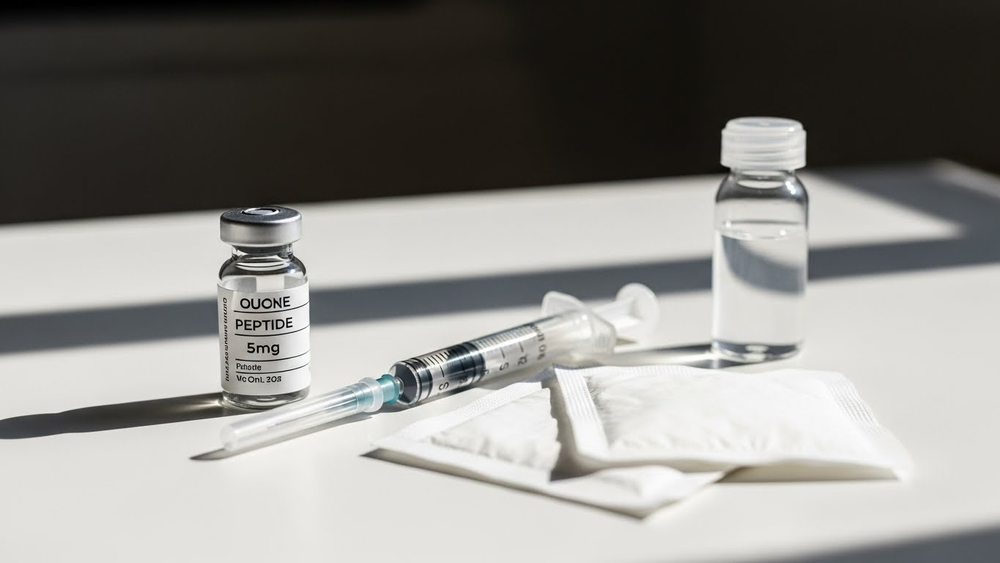
“Reconstitute” refers to adding a measured amount of sterile liquid (typically sterile bacteriostatic water or saline, depending on the product instructions) into a 5mg peptide vial so the powder dissolves into a uniform solution.
In my hands-on work, the main goal isn’t just making the powder disappear—it’s achieving:
- Uniform concentration: the same amount of peptide in each dose draw.
- Dissolution without degradation: gentle handling and proper contact time.
- Sterile technique: minimizing contamination risks during repeated needle entries.
Where people commonly go wrong
- Inaccurate volume: using an imprecise measuring method instead of a syringe.
- Rushing mixing: insufficient mixing time leading to incomplete dissolution.
- Over-inserting needles: repeated punctures that increase exposure risk.
- Skipping documentation: not recording batch concentration, date, and final volume.
Materials and Setup (Before You Touch the Vial)
I’ve learned to set up everything first because reconstitution is a “moment-in-time” process—once you puncture the vial, your workflow needs to be fast, clean, and consistent.
What you typically need
- Clean workspace (wipe down with an appropriate disinfectant)
- Protective gear (gloves are standard in sterile workflows)
- Sterile reconstitution fluid (use only what your product labeling/clinician specifies)
- Syringes and needles or equivalent sterile transfer devices
- Alcohol swabs
- Sharps container
- A sterile vial label to record concentration and reconstitution date
- Measuring scale or dosing log (optional, but helpful for consistency)
My practical setup tip
On my team, we pre-stage syringes with the calculated volumes and keep labels ready before starting. This reduces “pause time” with needles in hand and makes batch records more reliable.
Step-by-Step: Reconstitute a 5mg BPC-157 Vial
Below is a workflow that matches how sterile reconstitution is commonly handled in practice: controlled volume, gentle mixing, and sterile handling. The exact diluent choice and any storage guidance should come from the product labeling or clinician instructions.
Step 1: Confirm the vial strength and your target concentration
Your starting point is the vial size: 5mg. The next choice is the volume of diluent you’ll add, which determines your final concentration.
Because you didn’t specify your target concentration in the prompt, here are common concentration outcomes people calculate from a 5mg vial:
| Reconstituted Volume | Total Peptide | Final Concentration |
|---|---|---|
| 1 mL | 5 mg | 5 mg/mL |
| 2 mL | 5 mg | 2.5 mg/mL |
| 0.5 mL | 5 mg | 10 mg/mL |
Practical caution: Use the product’s instructions for recommended reconstitution volume and concentration range. Some peptides have specific guidance on final concentration and handling.
Step 2: Prepare your workspace and wash hands
I treat this like a small sterile procedure: clean surface, gloves on, alcohol swabs ready, and everything within reach. If your workspace is cluttered, I’ve found the error rate goes up—not because people are careless, but because they fumble.
Step 3: Disinfect the vial stopper
Wipe the rubber stopper on the vial with an alcohol swab. Let it dry (don’t immediately puncture while it’s wet).
Step 4: Draw the correct volume of sterile diluent
Using a sterile syringe, draw exactly the amount of diluent you calculated for your chosen final concentration. Double-check the syringe markings before injecting.
Step 5: Inject the diluent into the vial
Insert the needle through the stopper and slowly dispense the diluent into the vial. Avoid excessive foaming if possible.
Step 6: Gently mix until dissolved
Once the diluent is added, mix gently to encourage dissolution. I prefer gentle swirling or slow rolling rather than aggressive shaking, especially if the product is sensitive or you’re trying to minimize bubbles.
Common experiential marker: the solution should become visually consistent (no visible powder clumps). If you still see undissolved material, continue gentle mixing and allow time as recommended by the product instructions.
Step 7: Label the vial
Label the vial immediately with:
- Product name/strength (5mg)
- Reconstitution date
- Final concentration (e.g., mg/mL)
- Diluent type used (if appropriate)
- Any storage conditions your label specifies
Step 8: Storage and handling after reconstitution
Storage timelines and temperature requirements can vary by peptide and by the diluent used. Follow the product labeling or clinician instructions precisely. In my experience, the most common “failure mode” isn’t mixing—it’s forgetting that handling conditions (temperature swings, light exposure, repeated punctures) matter after reconstitution.
Concentration Math: Convert mg/mL to Your Dose Volume
After you reconstitute BPC-157 5mg, the key to consistency is understanding how much solution you need per dose. The conversion is straightforward:
Dose (mg) = Concentration (mg/mL) × Volume (mL)
So if you reconstitute to 2.5 mg/mL (5mg in 2mL), then:
- 0.2 mL contains 0.5 mg
- 0.4 mL contains 1.0 mg
- 1.0 mL contains 2.5 mg
Tip from experience: Write the concentration on the vial label exactly as you’ll use it in your dosing log. If your log says one thing and the label says another, errors happen quickly.
Sterile Technique and Risk Controls (What I Focus On)
Even when the math is perfect, contamination risk can undermine the whole process. My checklist for sterile handling is simple and repeatable:
- Minimize vial punctures: plan your workflow so you don’t repeatedly poke the stopper.
- Use fresh sterile syringes/needles as directed: follow your product and clinician guidance.
- Keep caps/stoppers protected: avoid touching sterile surfaces.
- Keep an audit trail: record reconstitution date, concentration, and any handling deviations.
Limitations to be aware of
Not all vials behave the same. Some are more difficult to dissolve quickly, and some solutions may show minor settling depending on formulation and temperature. If your product labeling addresses reconstitution behavior, storage, or appearance, treat that as the authority.
FAQ
How much sterile fluid should I add to a 5mg BPC-157 vial?
It depends on the final concentration you want (mg/mL) and what the product labeling or your clinician recommends. Use the vial strength (5mg) and your intended volume to compute concentration.
How do I know when the peptide is fully reconstituted?
In a typical workflow, the solution should appear uniformly dissolved with no visible powder clumps. Follow the product-specific instructions for mixing time and acceptable appearance.
Can I reuse the same syringe for multiple entries into the vial?
Best practice is to follow the product labeling and clinician guidance for syringe/needle use and sterility. Repeated entry increases exposure risk, so minimize punctures and use sterile technique consistently.
Conclusion: Your Next Practical Step
Reconstituting a 5mg BPC-157 vial is mostly about consistency: choosing the correct diluent volume to hit your target concentration, using controlled sterile technique, gently mixing until fully dissolved, and labeling everything so dosing stays accurate.
Next step: Decide your target final concentration (mg/mL) and reconstitution volume, then write that concentration on your vial label and dosing log before you start reconstituting.
Discussion